What Is Freeview?
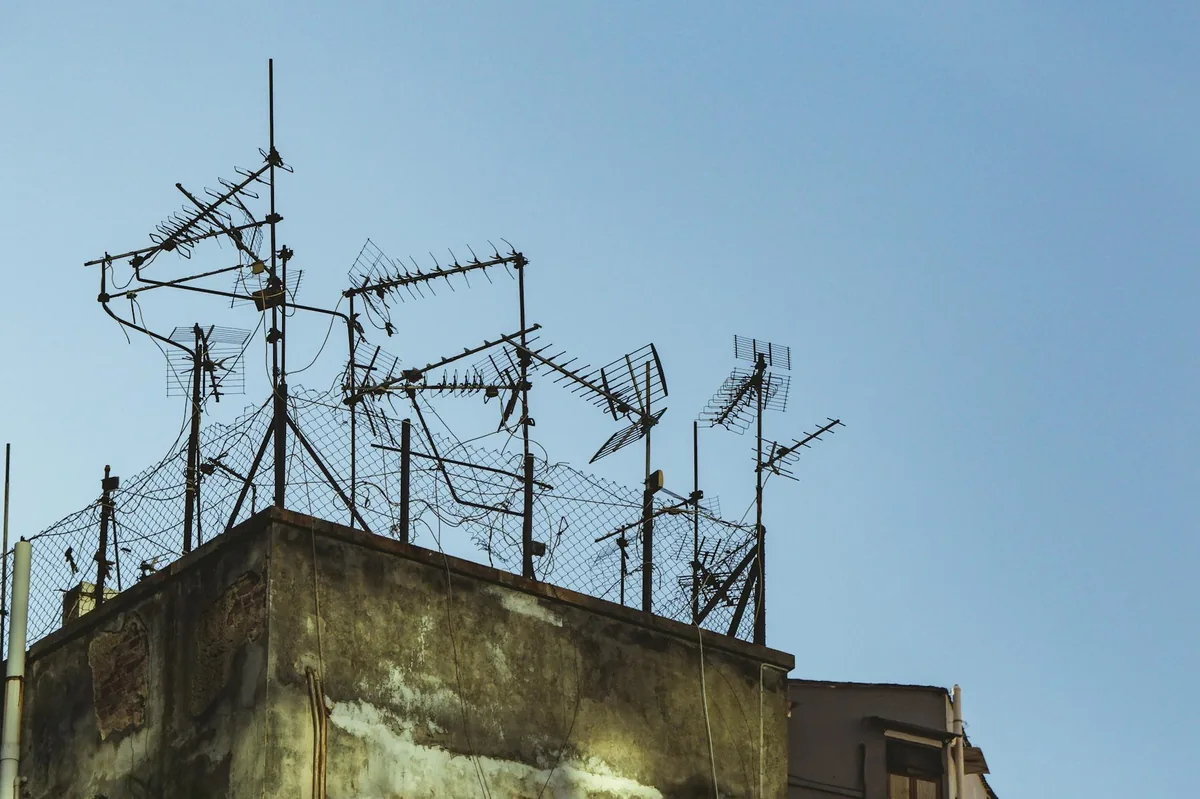
Freeview is the UK's free-to-air digital television platform, delivered via DTT — Digital Terrestrial Television. Launched in 2002, it broadcasts over 73 channels directly to your television set via a UHF TV aerial and a digital tuner, which is built into the vast majority of televisions sold in the UK since 2007.
The core Freeview offering includes all BBC channels (BBC One, BBC Two, BBC Four, BBC News, BBC Parliament, CBBC, CBeebies), ITV1, ITV2, ITV3, ITV4, Channel 4, E4, More4, Film4, Channel 5, 5Star, 5USA, and dozens more. These channels are entirely free to receive — there are no subscription fees, no direct debit, and no contract.
Modern televisions also support Freeview Play, which is an enhanced platform that combines live DTT channels with connected internet services. Through Freeview Play, viewers can access BBC iPlayer, ITVX, Channel 4 streaming, and My5 — adding catch-up television and on-demand content alongside the live aerial signal. This hybrid approach bridges the gap between traditional broadcast television and internet streaming.
- A TV with a built-in Freeview tuner (most modern sets qualify)
- A correctly installed UHF TV aerial — typically a rooftop or loft aerial
- A sufficiently strong transmitter signal in your area (check Freeview's signal checker)
- Broadband connection only required for Freeview Play on-demand features
Signal quality does vary by location. Urban areas typically receive a strong, reliable signal from nearby transmitters, whilst rural areas or properties in valleys or behind hills may experience a weaker signal, requiring a larger aerial or a signal booster. Poor signal leads to pixelation or channel drop-out — a notable disadvantage compared to internet-based services.
What Is IPTV?
IPTV stands for Internet Protocol Television — it is the delivery of television content over a broadband internet connection rather than via a traditional aerial, satellite dish, or cable. Instead of receiving a broadcast signal, your device connects to a server, which streams the video content directly to your screen.
IPTV encompasses a wide spectrum of services. At one end, you have the free, publicly available services that most UK households already use without realising they are technically IPTV: BBC iPlayer, ITVX, Channel 4 streaming, and My5. At the other end, fully commercial subscription services such as Now TV, Sky Glass, and various licensed multi-channel providers deliver hundreds of channels — including premium sport, Hollywood films, and international content — for a monthly fee.
No aerial is required for IPTV; your broadband connection does all the work. However, this comes with its own requirement: a stable and sufficiently fast connection. For standard HD streaming, 10 Mbps is generally the minimum; for 4K HDR content, 25–50 Mbps is recommended. Most UK households on a standard fibre or cable broadband package will comfortably meet these thresholds.
A key advantage of IPTV is flexibility. Whether you want to watch on your smart TV, laptop, tablet, smartphone, or a streaming device such as an Amazon Fire TV Stick or Roku, IPTV services work across virtually all connected screens. This device agnosticism makes IPTV particularly appealing for households with multiple viewers and multiple devices.
Head-to-Head Comparison
Here is a detailed breakdown of how Freeview and IPTV compare across the six factors that matter most to UK viewers.
Cost
Freeview is free to receive once you have a compatible television and a working aerial. A professional aerial installation costs approximately £50–£150 depending on your location and the type of aerial required. After that, there are no ongoing charges whatsoever — no licence fee payable to Freeview specifically (though the BBC TV Licence is a separate legal requirement if you watch live TV or use iPlayer).
IPTV costs range enormously. The major catch-up services — BBC iPlayer, ITVX, Channel 4 streaming, and My5 — are free with internet access. Paid IPTV services start at around £9.99/month for Now TV's Entertainment pass, rising to £60+/month for comprehensive Sky packages that include sport, cinema, and drama. In terms of pure cost, Freeview wins for basic viewing; IPTV becomes worthwhile when you need premium content unavailable on free-to-air.
Channel Count
Freeview offers over 70 channels of live broadcast television. This covers an impressive range for a free service — news, drama, comedy, factual, children's programming, film, and music. However, it does not include any dedicated sports channels (Sky Sports, TNT Sports), premium movie channels (Sky Cinema), or international language channels.
IPTV services vary significantly: free apps give you a handful of channels; mid-tier paid services typically offer 100–300 channels; comprehensive licensed providers can reach 500+ channels, including international sports, foreign-language content, and specialist interest channels unavailable anywhere on Freeview.
Picture Quality
Freeview broadcasts the majority of its main channels in HD (1080i), including BBC One HD, ITV HD, Channel 4 HD, and Channel 5 HD. The HD picture quality is generally very good for everyday viewing, though it is dependent on signal strength. Freeview does not support 4K or HDR content — the DTT broadcast spectrum simply does not have the bandwidth for it.
IPTV services can deliver the full range of picture quality options. Standard definition, HD, Full HD, and 4K HDR are all available depending on the service and your subscription tier. BBC iPlayer, Now TV, and Sky Glass all offer 4K HDR content for subscribers, giving IPTV a clear edge for home cinema enthusiasts with a 4K television.
Reliability
Freeview is entirely independent of your broadband connection. During internet outages — whether caused by your provider, a local fault, or bad weather affecting fibre lines — Freeview continues to work normally. The main vulnerability for Freeview is weather-related signal disruption, which can cause temporary pixelation during heavy rain or high winds, though this is usually brief.
IPTV is entirely dependent on your broadband connection. A slow connection causes buffering; an outage means no service. For households with a reliable, fast broadband connection (which now covers the majority of the UK), this is rarely a significant issue in practice. However, for those in areas with patchy connectivity, Freeview's independence from the internet is a meaningful advantage.
Content Depth
Standard Freeview provides live broadcast television only. You cannot pause, rewind, or record without a Freeview+ or Freeview Play device. Freeview Play adds a seven-day catch-up window through connected apps, which significantly improves the proposition — but on-demand libraries remain limited compared to IPTV.
IPTV services typically include extensive on-demand libraries alongside live channels. Now TV's Cinema pass gives access to thousands of films; BBC iPlayer holds a year's worth of BBC content; Sky's on-demand library spans years of boxsets and films. For viewers who prefer to watch on their own schedule rather than at broadcast time, IPTV is considerably more flexible.
Setup
Freeview is built into virtually every television sold in the UK since the digital switchover. No additional equipment is required beyond the aerial. For most households, setup simply means connecting the aerial cable to the TV's aerial input and completing an automatic channel scan — a process that takes under five minutes.
IPTV setup varies. For smart TVs, it is usually a matter of downloading the relevant app (iPlayer, ITVX, Now TV) from the TV's app store and signing in. For non-smart TVs, a streaming device such as an Amazon Fire TV Stick or Google Chromecast is required, adding a one-off cost of £30–£55. Some paid IPTV services may require additional configuration steps.
Freeview: Pros and Cons
Pros
- Completely free: After the one-off aerial installation cost, there are no ongoing charges or subscriptions of any kind.
- No internet dependency: Freeview works without broadband, making it resilient to outages and ideal for areas with poor connectivity.
- Excellent mainstream coverage: All BBC channels, ITV, Channel 4, and Channel 5 — the channels most UK viewers watch most of the time — are included.
- Built into your TV: No additional devices, streaming sticks, or app accounts needed for basic channel access.
- Simple and reliable: Once your aerial is installed, Freeview simply works. No buffering, no login sessions, no subscription renewals.
- Freeview Play adds catch-up: Integrated catch-up on connected TVs substantially improves the on-demand offering at no extra cost.
Cons
- No premium channels: Sky Sports, TNT Sports, Sky Cinema, and other premium services are entirely absent from Freeview.
- No 4K or HDR: DTT broadcasting cannot support 4K resolution — a significant limitation for 4K TV owners.
- Limited on-demand beyond Freeview Play: Without a Freeview Play-connected TV, there is no catch-up or pause/rewind functionality.
- Signal dependent: Rural areas, properties in signal shadows, and areas distant from transmitters may receive poor or unreliable reception.
- No international content: Foreign-language channels and international sports coverage are largely absent from the Freeview platform.
IPTV: Pros and Cons
Pros
- Huge channel selection: Licensed IPTV services can offer hundreds of channels covering sport, films, international content, and specialist interests.
- 4K and HDR support: Premium services including BBC iPlayer, Now TV, and Sky Glass deliver 4K HDR content to compatible televisions.
- Extensive on-demand libraries: Watch what you want, when you want — boxsets, films, and catch-up content available at any time.
- Works anywhere with broadband: No aerial required — ideal for rental properties, flats, and properties where aerial installation is impractical.
- Multi-device flexibility: Watch on your TV, phone, tablet, or laptop — wherever you are in the country.
- International and niche content: Foreign-language channels, overseas sports leagues, and specialist programming not available on Freeview.
Cons
- Monthly subscription costs: Premium IPTV services range from around £10/month to £60+ per month — costs that add up significantly over time.
- Internet dependency: A broadband outage means no service. Slow or unreliable connections cause buffering and degraded picture quality.
- Subscription complexity: The UK IPTV market is fragmented — different sports, different content, and different channels are often split across multiple competing services, each requiring separate subscriptions.
- Device requirements: Non-smart TVs require an additional streaming device, adding a one-off cost and setup complexity.
- Data usage: Streaming video consumes significant broadband data — 4K HDR content can use 15–25 GB per hour, which may be a consideration for capped data plans.
Using Freeview and IPTV Together
The most sensible approach for the majority of UK households is not to choose between Freeview and IPTV, but to use both in combination. This layered approach gives you the best of both worlds without unnecessary expense.
A practical setup looks like this:
- Freeview for live free-to-air: Use your TV's built-in tuner for all BBC, ITV, Channel 4, and Channel 5 live viewing. This costs nothing and requires no internet.
- Free IPTV apps at no extra cost: Add BBC iPlayer, ITVX, Channel 4 streaming, and My5 on your smart TV or streaming device. These are entirely free with a broadband connection and provide catch-up and on-demand access to all the main UK broadcasters' archives.
- One targeted paid IPTV service: If you need sport, add Now TV's Sports pass during the football season, or subscribe to a licensed multi-channel provider for the content you specifically want. Avoid paying for multiple overlapping services simultaneously.
This approach covers the vast majority of what most UK households actually watch, keeps monthly costs to a minimum, and maintains resilience — if your broadband goes down, Freeview keeps you covered. A Freeview Play-enabled TV or set-top box makes this combination particularly seamless, integrating live channels and streaming apps within a single on-screen guide.
Which Should You Choose?
The right choice depends on your budget, broadband quality, and viewing habits. Use this decision guide:
- You primarily watch BBC, ITV, Channel 4, and Channel 5 content
- You have a limited budget and do not want any monthly subscriptions
- Your broadband connection is slow, unreliable, or non-existent
- You live in a property where a TV aerial is already installed or easily fitted
- Simplicity and reliability matter more to you than content depth
- You want premium sport — Premier League, Champions League, F1, cricket, rugby
- You want 4K HDR content on a compatible television
- You need international or foreign-language channels
- You prefer on-demand flexibility over scheduled broadcast TV
- You live in a property where aerial installation is difficult or prohibited
- You have a fast, reliable broadband connection (50 Mbps+)
For most UK viewers in 2026, the answer is straightforward: keep Freeview as your foundation and selectively add the IPTV services that cover the content gaps you actually care about. There is no reason to pay for an IPTV service that duplicates what Freeview already provides for free. The key is to be selective — identify the one or two premium services that address your specific viewing needs and subscribe only to those.
As broadband infrastructure continues to improve across the UK, IPTV will gradually become an increasingly compelling proposition. The long-term trajectory of the television industry is clearly toward IP delivery. However, Freeview remains an excellent, resilient, and entirely free foundation for UK television viewing — and it is unlikely to disappear any time soon, with DTT confirmed as part of the UK broadcasting landscape until at least 2034.
Frequently Asked Questions
Can I get Freeview without an aerial?
No. Freeview requires a UHF TV aerial pointed at a transmitter. Without an aerial connected to your television's aerial input, the Freeview tuner cannot receive any channels. However, Freeview Play's catch-up features (BBC iPlayer, ITVX) do require broadband for on-demand content — so you can still access those apps independently on a smart TV without an aerial, but you will not receive live Freeview channels.
Is IPTV better quality than Freeview?
For live viewing on main channels, Freeview HD and IPTV HD are comparable. Both deliver a clean, sharp HD picture on a well-calibrated television. IPTV has a clear advantage for 4K content — services like BBC iPlayer and Now TV offer 4K HDR, which Freeview does not support due to the bandwidth limitations of the DTT broadcast spectrum. If you own a 4K television and want native 4K content, IPTV is the only option.
Will Freeview be switched off in the UK?
Ofcom and the government have indicated that DTT (Freeview) remains important for the UK until at least 2034. There is no imminent switch-off date, and any future switchover would require extensive public consultation and a lengthy transition period comparable to the analogue switchover of 2012. The industry is gradually shifting toward IP delivery, but millions of UK households still rely on Freeview, and its future is secure for the foreseeable future.
Can I watch Freeview channels on IPTV?
BBC, ITV, Channel 4, and Channel 5 all have official streaming apps — iPlayer, ITVX, Channel 4 streaming, and My5 respectively — that function as IPTV services, allowing you to watch live streams and on-demand content via broadband. Some licensed IPTV providers also include live feeds of Freeview channels within their packages. So whilst you cannot receive the DTT signal itself over the internet, the content from those channels is widely available through official IPTV apps.